Showing posts with label Green Cars. Show all posts
http://www.goodgreencars.com/

Chrysler, brought several cars from its ENVI extended-range electric car program to the 2009 Detroit Auto Show, including a Lotus-designed sports car and an electric concept car.

Lots of companies had new green technologies to show off, though, (except for Ford, which only brought a slide presentation of its plans to build electric cars in the future).
Chrysler set itself apart by thanking the government and the American people at its press conference for the bailout money and acknowledging that it had a new responsiblity to consumers who had granted them the loan “just in time.”

Part of this responsibility, in Chrysler’s view, is to build cars that answer our energy and creature-comfort needs. It’s working on it. The company owns GEM, the golf-cart-like NEV company, and it brought three ENVI electric vehicles, including two Jeeps and minivan with a 40-mile electric range.

But it was the ENVI concept cars that stood out. Here’s the skinny on these new EVs:

Dodge Circuit
EV sports car shown in Tangerine
Designed by Lotus — and looks like it
0-60 in under 5 seconds, top speed of 125
150-200 mile range from lithium-ion batteries

Chrysler 200C
Interior made with organic materials
In-car Wi-Fi hotspot from Mopar
Microsoft-powered on-board computer includes a Facebook-like app, music downloads
0-60 in 7 seconds, 268 hp
40-mile electric range; 400 miles with range-extending gasoline engine


Chris Gautz
Jackson Citizen Patriot

This summer, cars speeding around Michigan International Speedway won't just be chasing a checkered flag. They'll be testing connected-vehicle technologies that could lead to the attraction of high-paying jobs and businesses to the area.

In Detroit this morning, officials were expected to announce MIS and the Michigan Department of Transportation have entered into a partnership to use and market the Brooklyn speedway to firms that develop and manufacture connected-vehicle technologies. The technology enables vehicles to "talk" to each other in a way that will prevent collisions and improve fuel efficiency.

MIS President Roger Curtis said the companies involved will be able to take their designs out of the laboratory and test them in real-world settings.

"I'm very excited about what this means. This could be the next Silicon Valley," Curtis said. "We really now have the incubator for this technology to take off here in Michigan."

They will likely test the vehicles on the existing road course at the track and set up temporary traffic lights to mimic the experience of driving, while on a closed, private and neutral environment.

Aside from technology companies testing their products, automotive companies could also test their vehicles alongside their competitors to ensure the vehicles are "talking" to each other correctly.

He sees the track being a neutral, Switzerland-like setting.

"It has to work across all manufacturers," Curtis said.

U.S. Rep. Mark Schauer, D-Battle Creek, said using MIS in this way will ultimately strengthen the state's economy.

"To have this kind of test course here is an incredible asset," he said.

Companies make decisions on where to locate based on a number of factors, he said, but having the test course within range of 80 percent of all automotive research and design in the United States, might encourage firms to locate nearby.

The Connected Vehicle Proving Center and the Center for Automotive Research also are involved.

"Research and development is critical to the growth of this technology and its value in lowering the number of crashes, injuries and fatalities, as well as the potential impact on the automotive sector and job creation," David Cole, chairman of the Center for Automotive Research, which is the home of the Connected Vehicle Proving Center, said in a statement.
Fort Worth Star Telegram
G. Chambers Williams III


GM parades 17 vehicles before media at Detroit auto show

The nation’s top automaker showed recently at the Detroit auto show that the company is far from out.

Three of the vehicles were ones GM had already said it would roll out at the show, the redesigned 2010 Chevrolet Equinox, Cadillac SRX and Buick LaCrosse.

But the automaker also showed three others that weren’t expected: the production version of the compact Orlando crossover vehicle, whose concept was unveiled at last fall’s Paris auto show; the Converj, a Cadillac version of the planned Chevrolet Volt extended-range electric car; and the Chevrolet Spark, a very fuel-efficient minicar that GM plans to introduce in the U.S. market in early 2011.

And in all, the automaker paraded 17 vehicles through the show’s media days that will be on the market as new or significantly revised products over the next two years.

One of the surprises was the Orlando, a seven-seat crossover based on the architecture of the soon-to-be-offered Chevrolet Cruze compact sedan.

The Orlando "offers the versatile attributes of a sport utility, family van and wagon," GM said. It’s considerably smaller than the new, 2009 Chevrolet Traverse, although both have a third row of seating.

The Orlando is intended to be a lower-priced, highly fuel-efficient people hauler, more in the vein of a Toyota RAV4. It will come only with a four-cylinder engine. The concept was powered by a 2.0-liter turbodiesel engine, but there is no word yet whether that engine will be offered in the U.S. market.

GM says the Orlando has "reconfigurable, theater-style seating," and that both the second and third rows can be folded into the floor to create a completely flat load floor when extra cargo space is needed.

As for the Spark, the Detroit version was the concept, while the production version will be shown at the Geneva Motor Show in March. GM said the Spark will go on sale in Europe in early 2010, but won’t be available in U.S. Chevy showrooms until early 2011.

Cadillac’s Converj (pictured above) has the same Voltec electric propulsion system that GM will roll out next year on the Chevy Volt, but the comparisons to the Chevy end there.

The Converj is a grand-touring coupe with a bold design that’s lacking on the Volt. The exterior draws a lot of its appearance from other newer Cadillac vehicles bearing the "art and science" design philosophy.

With room for four, the Converj "is intended to show how GM’s revolutionary Voltec electric propulsion technology can power a luxury coupe with a typically Cadillac 'no compromises’ design," the automaker said. "It enables up to 40 miles of gas- and emissions-free electric driving with extended-range capability of hundreds of miles."

The 2010 Buick LaCrosse full-size sedan is a completely redesigned car intended to build on the success of Buick’s Enclave large crossover vehicle, GM said.

Among its features will be available all-wheel drive, a variety of new technological options, and a choice of two fuel-efficient V-6 engines. The basis for the car’s design was the Buick Invicta concept introduced at the 2008 Beijing auto show. Buick is the most popular luxury brand in China.

Chevy’s redesigned 2010 Equinox will come with a choice of new engines, including a 2.4-liter, direct fuel-injected four cylinder that GM says will lead the compact crossover segment in fuel economy – ahead of the segment-leading RAV4 and Honda CR-V. Highway mileage is expected to be 30 mpg.

With seating for up to five, the Equinox has styling influenced by the newest version of the Chevy Malibu sedan.

The 2010 SRX is the second generation of Cadillac midsize luxury crossover, and it has been completely redesigned – becoming a rear-drive rather than front-drive vehicle (with optional all-wheel drive). Two high-tech V-6 engine choices will be available in the SRX, which will have room for five people – no third row will be offered.

Smaller and more carlike than the current SRX, the new model is quite similar in size and appearance to the segment-leading Lexus RX 350, which will be the Cadillac’s biggest competitor.

Also displayed in Detroit was the all-new 2010 Cadillac CTS Sport Wagon, a family-oriented version of the redesigned CTS sedan that debuted in 2007.

"Cadillac’s first-ever North American wagon is a progressive take on the classic wagon body style that delivers significant functionality and fuel efficiency, including up to an estimated 28 mpg highway," GM said.

Production of the wagon will begin this spring, and the cars will begin arriving at U.S. Cadillac dealerships by late spring or early summer. No prices have been announced yet.

"The dramatic design of the CTS Sport Wagon makes it a compelling alternative to SUVs and larger vehicles," said Mark McNabb, GM’s vice president for Cadillac.

The wagon is "in synch with the changing luxury market, and it just could be the right car in the right size to spark a re-emergence of wagons in North America," he said.

The five-passenger Sport Wagon will have 25 cubic feet of cargo space and there will be options such as a power tailgate and a rear panoramic sunroof.
http://www.autobloggreen.com/

After hinting at on the teaser site that was launched for the Ford Fiesta a couple of months ago, the Dearborn automaker has confirmed that it will launch the PowerShift dual clutch gearbox for 2010. This will be the first North American market application of the technology for Ford. The 6-speed unit will is a dry clutch setup that will go into the Fiesta first when it launches at the end of this year. Ford's first DCT application in Europe is a wet-clutch setup on the diesel Focus.
Compared to existing four speed automatics, the PowerShift will yield a 9 percent improvement in fuel efficiency as well as facilitating extra features. During coast down, both clutches are automatically disengaged, reducing drag. The control of the clutches is also integrated with the brake system to provide hill-hold and launch assist. The dry-clutch PowerShift is 30 lbs lighter than the existing four speed automatic on the U.S. Focus. This gearbox already appeared in the Lincoln Concept C and Volvo S60 concepts in Detroit last week and will make its way into other smaller Fords in the next couple of years.
By Stever Parker
Huntington Post

Since every automotive enthusiast publication, website, and magazine runs some sort of "Best of" list every year, we're listing those we think are Detroit's "Most Significant" for 2008 and 2009, and some early available news on 2010 models. After reading this post, we'd really like to know where you think we're right - or wrong - and tell us what cars should be on this list, and why. They are listed in no specific order.

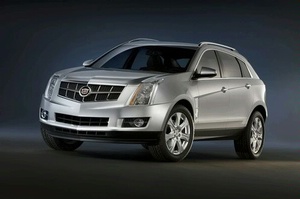
CADILLAC SRX
On-sale in mid-2009 as a 2010 model.


This "Caddy station wagon for the 21st century" will likely use a traditional gasoline powertrain, probably a version of GM's "High Feature" 3.6-liter V6 engine with a six-speed automatic transmission. A gas/electric hybrid version could be added to the SRX roster in late 2010, and the main reason we picked it for our "Most Significant" list. No new SRX pricing as yet; 2009 CTS base prices range from $33,500 to $36,000.

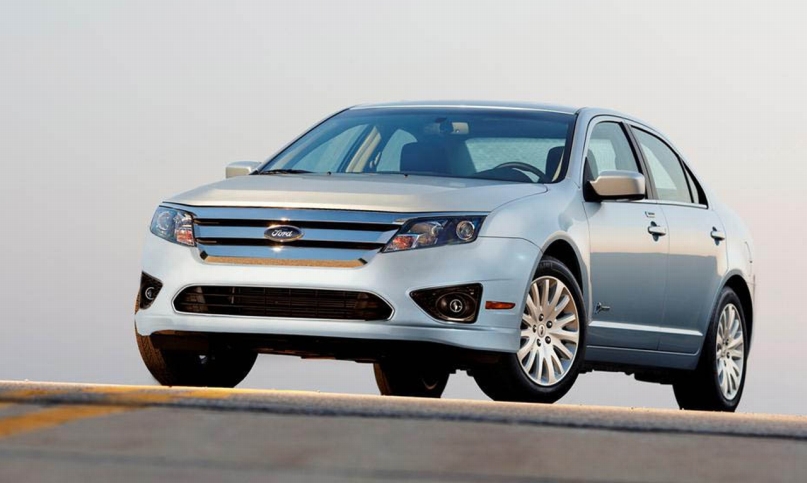
FORD FUSION HYBRID/MERCURY MILAN HYBRID
On-sale mid-2009 as a 2010 model.


Ford's all-new 2010 Fusion hybrid has been certified by the EPA at 41 mpg/city and 36 mpg/highway, with a combined rating of 39 miles per gallon. That beats the hybrid versions of Camry, Malibu and Altima. Based on the competition's '09 ratings for combined city and highway driving, the new Fusion hybrid beats every widely sold vehicle in America except the Toyota Prius hybrid (46 mpg combined) and the smaller Honda Civic hybrid (42 mpg combined). Pricing will start around $27,000.

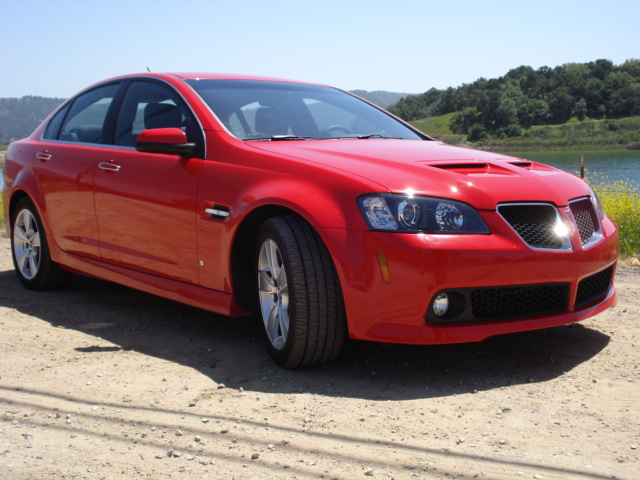
PONTIAC G8 GT
On-sale now.


The G8 is almost certainly the last big family-sized rear-wheel drive sedan from the Pontiac division. Sometime soon, Pontiac will become a niche brand with just one or two models (sold at dealers selling several GM makes). G8's three engine offerings, a 256-hp 3.6-liter V6, a Corvette-derived 361-hp 6.0-liter V8, plus a new GXP package with a 402-hp 6.2-liter V8 and a 6-speed automatic are not high-mileage units. It's built in Australia by GM's Holden division. Base prices from $28K to $31,500.

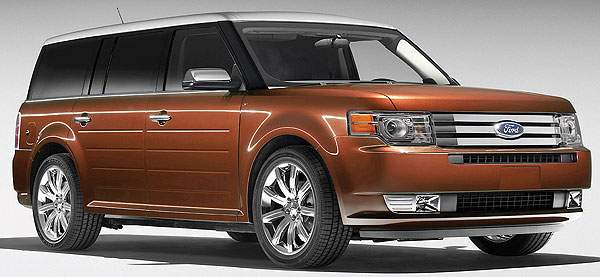
FORD FLEX
On-sale now.


Like the Pontiac G8, Flex probably looked great - on paper - about four years ago, when planning for future production models really begins. Flex's one engine choice is its biggest drawback: a thirsty 262-hp 3.5-liter V6 mated to a 6-speed automatic (16mpg in-town, 22 highway). All-wheel drive is available. Flex would have been a great car - in 2002. Base prices start between $28,000 and $36,000 for 2009 models.

CHEVROLET MALIBU HYBRID
On-sale now.


Malibu's "single-mode" hybrid, with a 2.4-liter 4-cylinder gas engine mated with an electric motor, produces 164-horses and mpg figures of 26 in-town and 34 on the highway. New for 2010 (on-sale late 2009) is rumored to be a Malibu "two-mode" hybrid. That model would use a gasoline 3.6-liter V6 + an electric motor to make 255-hp. Both hybrid systems stop the gas engine at red lights, and the two-mode allows the vehicle to run at low speeds on electric power only. Malibu hybrid prices start at $26K; 2010 pricing hasn't been announced.

CHRYSLER TOWN AND COUNTRY/DODGE GRAND CARAVAN
On-sale now.


When Lee Iacocca was fired from Ford and went to lead Chrysler, he took with him Ford engineer Hal Sperlich, who brought with him a van project that became the first US minivan in 1983. Town & Country and Dodge Grand Caravan still dominate the minivan market, and offer a 3.3-liter V6, a 3.8-liter V6 and a 4.0-liter V6. Some models still have stone age four-speed automatics; others a modern six-speed. 2009 base-prices go from $24,230 to $36,550.

2010 LINCOLN MKZ
On-sale Spring, 2009


Lincoln's 2010 MKZ gets somewhat-new looks inside and outside. MKZ comes with one drivetrain choice: a 263-hp 3.5-liter V6 Duratec engine with a six-speed automatic transmission (similar to Ford's Flex wagon drivetrain). MKZ offers a choice of front- or all-wheel drive. MKZ is easy to spec out, with options kept to an enjoyable minimum. 2010 MKZ is built in Hermosillo, Mexico. 2009 models are base-priced between $32,695 and to $34,585.

2010 CHEVROLET CAMARO
On-sale first quarter 2009 as a 2010 model.


A two-door coupe will add a convertible version in late '09 (Camaro in photo is a convertible prototype). A base 3.6-liter V6 engine produces 300 horsepower. Automatic-equipped SS models get a 6.2-liter V8 making 400 horses and has Active Fuel Management cylinder deactivation (which most owners will switch "off"). SS versions with a manual transmission get a monster 422-horse 6.2-liter V8. Mileage figures and official pricing haven't been announced. Can't wait to see those mileage figures ... and, I'd wager, neither can Congress.

2009 PONTIAC VIBE
On-sale now.


Vibe is built on the same Fremont, California assembly line as its near-twin, Toyota's Matrix. GM shares the factory with Toyota, and New United Motor Manufacturing Inc. (NUMMI) was the first joint venture between GM and an import carmaker. The 2009 Vibe is redesigned inside and out and has more power and other new features, including the return of all-wheel drive, a definite plus. Two engines are offered, a 1.8-liter 132-horsepower four, and a 158-hp 2.4-liter four-cylinder. Mileage ranges from 20 mpg in-town to 26 highway, depending on the model. Base prices range from $16,100 to $20,875.

JEEP WRANGLER
On-sale now.


Jazz is the quintessential American music, and Jeep's Wrangler is the quintessence of American cars. Jeep's logo ties at #1 as most-recognized product symbol worldwide along with Coca-Cola's, and Wrangler and Corvette remain America's most authentic cars. All models have a 3.8-liter V6 engine, making between 202- and 205-horsepower, depending on model. Manual or automatic transmissions are available. "There's nothing like the real thing." Base prices range from $20,460 to $31,840.

Some photos by www.SteveParker.com.
Associated Press

LANSING, Mich. - Gov. Jennifer Granholm and lawmakers hope generous tax incentives will help make Michigan the center of efforts to research and manufacture advanced batteries used in hybrid and electric vehicles.

Legislators say the United States today has no large-scale production plant for the lithium-ion battery, the technology General Motors Corp. expects to power its touted Chevrolet Volt.
Most battery technology is being developed in Asia.
"It is imperative that Michigan possess this technology to keep Michigan the center of car manufacturing," said Sen. John Pappageorge, a Troy Republican. Before adjourning this month, the Legislature approved tax credits worth up to $335 million depending on how many battery packs are assembled here, production expenses and other factors. Granholm is expected to sign the legislation.

Lawmakers were motivated to act at a time auto demand has dropped due to the ailing economy and the credit crunch, which has made it tougher for some buyers to get financing. GM and Chrysler LLC recently secured a $17 billion lifeline from the federal government.

The same week lawmakers voted for the credits, GM announced it was delaying construction of a Flint engine factory to conserve cash. The plant eventually will make 1.4-liter engines for the Chevy Cruze and the Chevy Volt plug-in electric car, key products in the century-old automaker's bid to turn itself around after relying on highly profitable truck and SUV sales.

"That's just temporary," Granholm said. "They are going to produce the Volt. ... The battery that is going to power the Volt -- we intend that to be made in Michigan." GM could make a decision early next year.

The state also is working with a cell manufacturing company to build a facility in Michigan. The governor says the rechargeable lithium battery not only will store energy in people's cars but potentially could be used for their homes and businesses, too.

"All of that we want to make a big play for Michigan," Granholm said. "We want it to be an American solution produced by American workers."

Things are moving quickly on the battery front. Fourteen U.S. technology companies and a national laboratory this month created an alliance to seek billions in federal funding for construction of a plant to make advanced vehicle batteries.

The U.S. will lose out on high-tech jobs if Japan, South Korea and other countries continue dominating battery development, according to the new coalition.

Michigan's tax incentives are similar to those offered the film industry earlier in 2008. To entice moviemakers to choose Michigan over competing states, Granholm and legislators created refundable tax credits for in-state movie production expenses.

Giving tax breaks is nothing new, with the state often deciding to forgo tax revenue in exchange for economic investment and job creation. But refundable credits go further. They are more like a rebate for production expenses and can require the state to cut checks to businesses if the credits exceed their tax liability.

Refundable credits have been castigated by critics such as Sen. Nancy Cassis, a Novi Republican who has said Michigan would be more attractive if it provided "broad-based tax relief ... benefiting all, rather than just a selected few."

The criticism mostly has been ignored. Senators scaled back the battery bill's potential price tag by nearly $200 million before voting 31-3 to pass the legislation. It was approved 94-0 by the House.

Backers say Michigan just cannot afford to miss out on a vehicle battery market that could total $50 billion by 2020. They describe the tax incentives as a "down payment" toward fostering high-tech industries. The battery bill is House Bill 6611.
top