


General Motors Chairman and CEO Dan Akerson plans to auction his 1958 Corvette with proceeds going to Habitat for Humanity Detroit and the rebuilding of the Morningside Commons neighborhood on the city’s lower east side.
Akerson and his wife Karin are active in Detroit donating their time, money and fundraising support to several charitable groups. They made a personal, cornerstone $1 million donation in February to help launch
“Leaders to Rebuild Detroit,” Habitat Detroit’s three-year, $25 million initiative to serve at least 500 families in Morningside Commons through house construction, rehabilitation, critical repairs and energy-efficiency upgrades.
“A strong America is built on strong communities, and building those communities starts with one hammer, one nail and one person – and from there it’s contagious,” Akerson said. “My wife, Karin, and I want to see this effort to rebuild our headquarters city catch on, spread out and draw scores more volunteers and millions more in contributions."
For more information about the Corvette, click HERE!
Autoblog Green
Jay Leno – in his traditional jeans and jean shirt, of course – has just had the opportunity to park a pre-production Chevy Volt in his Big Dog Garage, and he's kindly shared the experience with his fans. Right off the bat, Jay likens the future-tech Volt to a 1916 Owens Magnetic that operates on the exact same principle, proving that all good ideas eventually have their day in the sun on the road.
Leno has some interesting questions for Volt Chief Engineer Andrew Farah that are likely to be on the minds of regular shoppers who may consider the Volt for their next new car at the end of 2010. He also like the car's high-tech, lightweight stick... watch the video to see what we mean.
Naturally, Jay eventually takes the Volt out for a spin, and from what we can tell, he came away impressed. Somehow, Leno ends up talking about the Mazda Miata and wristwatches and why men should buy the Volt... or something like that. Anyway, hit the jump to watch the video and see Jay's reaction to the 2011 Chevy Volt. Thanks for the tip, MIikael W!


http://lawschoolheadlines.com/
A group of Detroit law school students is touring the country in a Winnebago-turned-law-office, helping low-income veterans obtain disability and pension benefits.
The University of Detroit Mercy School of Law students are traveling in what is believed to be the first mobile law office on wheels — a 31-foot converted recreational vehicle that was donated last year by General Motors Corp.
The Big Three auto giant retrofitted the $110,000 vehicle with built-in filing cabinets, computer desks and a wheelchair lift to help the law school launch its Veteran’s Law Clinic, officially known as the Project Salute program.
The program, which recently celebrated its one-year anniversary, has helped more than 2,000 veterans in 11 states and has an army of 740-plus pro bono attorneys lined up across the country, ready to help the veterans obtain benefits.
For more information on Project Salute, Click Here
 David Olive
In the weeks leading up to the expected bankruptcy of this century-old icon, majority sentiment in the U.S., and to a lesser extent here, has been hostile about rewarding a chronically incompetent enterprise with a taxpayer-funded bailout.
Yes. A humbled GM can change.
Post-bankruptcy, a leaner and much healthier GM will continue to put bread on the table for tens of thousands of employees, about 4,000 suppliers, and several thousand dealership employees that often are the business mainstay in small-town North America.
GM remains the U.S.'s biggest manufacturer, still a powerhouse of engineering and technological breakthroughs, most visibly with its all-electric Chevrolet Volt. GM is America's biggest purchaser of information technology.
Entire states in the industrial Midwest and Canadian cities such as Oshawa, Oakville, Windsor and St. Catharines rely on GM and its employees for an outsized portion of their property and income-tax revenue.
All of which is moot, if GM is ultimately destined, as many believe, for the scrapyard in the sky. Somehow, I don't think so.
GM will emerge from bankruptcy with only one-quarter or so of the debt it held earlier this year.
GM's hourly wage costs, after enormous concessions by the Canadian Auto Workers and the United Auto Workers, are now in line with wage rates at "transplants" – the U.S. and Canadian factories operated by foreign-based automakers. The UAW has given up its right to strike until 2015.
GM will have cut its fixed costs to levels enabling it to compete on price with foreign-based rivals.
CEO Fritz Henderson told reporters last week,"We will come out of this rid of some of the historic legacy costs that have been dragging us down for the last 20 years or so," Bob Lutz, GM vice-chairman, said in a Thursday speech. "We will come out of it with an all-new focus on product development."
In an off-the-record briefing of reporters that same day, an Obama administration official said: "GM should be highly, highly profitable given the new cost structure that is being put in place, given the vast reduction of liability that has been achieved."
Fact: "Auto companies rarely die," CEO Henderson reminded reporters last week.
He's not whistling in the dark, having overseen in the past few weeks the drastic makeover of GM that critics have demanded for decades. And he's right – out of national pride, France, Germany, Japan, China, Russia and others routinely subsidize profit-challenged local automakers.
Focused on just four brands rather than eight, Buick and GMC will no longer be deprived of new-product development funds. For the first time, Buick will have close to a full line of models. And GM will have a $1.3-billion annual marketing budget for each of Chevrolet and Cadillac, double the current ad spend, and close to what Toyota commits to its namesake and Lexus brands.
That's crucial, because GM quality and reliability have vastly improved in the past decade (Buick typically tops or is near the top of J.D. Power quality surveys), but GM has lacked the money to tell that story to potential customers that first turned away from GM decades ago. A clean-slate GM has a decent shot at winning customers among Gen Y motorists (ages 22 to 32).
At 70 million people, that group is larger than either Gen X or the baby-boom generation.
Certainly GM has the J.D. Power- and Consumer Reports-acclaimed vehicles for making converts, including the Chevy Malibu, Impala, HHR and the Cadillac STS sedan.
One of the nice things about not being No. 1 is that rivals aren't all gunning for you. With half the market, GM had the most to lose over the past three decades. Now everyone from Kia Motors to Ford Motor Co. will have Toyota in their sights, instead.
And Detroit has a spokesman in Barack Obama, who at a news conference two weeks ago sang the praises of the Ford hybrid parked in his Chicago garage.
"A year or two of Obama emphasizing the restructured GM and Chrysler," U.S. marketing consultant Dennis Keene told Business Week recently, "which he has staked his reputation and taxpayer money on, and you could start to see Gen Y take a lot more interest in these brands and looking at them in a new light."
Alluding to some of the unexpected roles he has taken on as President, Obama joked at the annual White House Correspondents' Dinner a few weeks ago that Car & Driver had named him its "CEO of the Year."
We can only hope.
 Bree Fowler
Associated Press
GMAC LLC, the auto and home lender that received a $6 billion government bailout, posted its first profit in six quarters after recording gains from a debt swap that helped avert default.
The company’s fourth-quarter profit of $7.46 billion compares with a loss of $724 million a year earlier, the Detroit- based company said today in a statement. Extinguishing debt in the bond exchange produced an $11.4 billion gain. The auto finance unit swung to a $1.31 billion deficit from a $137 million profit, and home lending’s loss widened to $981 million from $921 million a year earlier.
GMAC won permission from the Federal Reserve in December to become a bank and gain access to the Treasury’s industry rescue fund as part of an effort to save General Motors Corp.
CADILLAC SRX
On-sale in mid-2009 as a 2010 model.
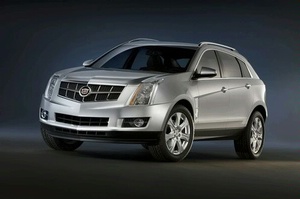
This "Caddy station wagon for the 21st century" will likely use a traditional gasoline powertrain, probably a version of GM's "High Feature" 3.6-liter V6 engine with a six-speed automatic transmission. A gas/electric hybrid version could be added to the SRX roster in late 2010, and the main reason we picked it for our "Most Significant" list. No new SRX pricing as yet; 2009 CTS base prices range from $33,500 to $36,000.
FORD FUSION HYBRID/MERCURY MILAN HYBRID
On-sale mid-2009 as a 2010 model.
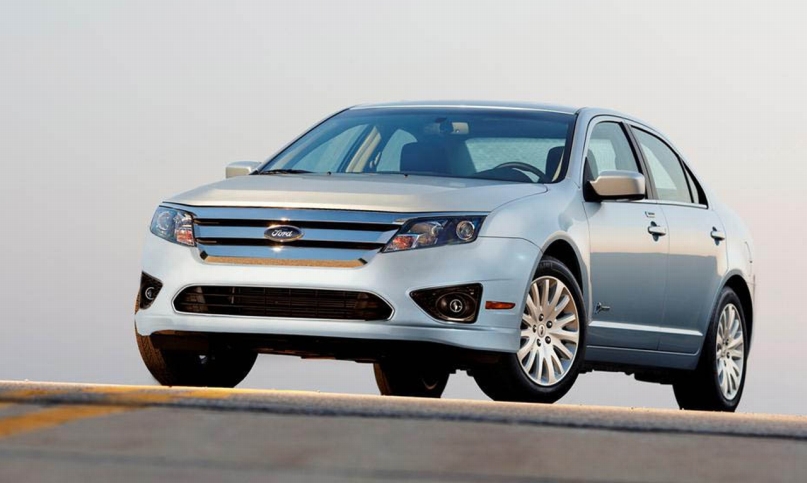
Ford's all-new 2010 Fusion hybrid has been certified by the EPA at 41 mpg/city and 36 mpg/highway, with a combined rating of 39 miles per gallon. That beats the hybrid versions of Camry, Malibu and Altima. Based on the competition's '09 ratings for combined city and highway driving, the new Fusion hybrid beats every widely sold vehicle in America except the Toyota Prius hybrid (46 mpg combined) and the smaller Honda Civic hybrid (42 mpg combined). Pricing will start around $27,000.
PONTIAC G8 GT
On-sale now.
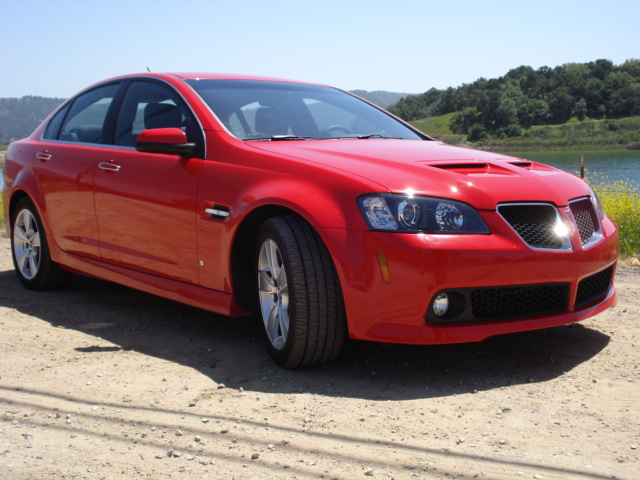
The G8 is almost certainly the last big family-sized rear-wheel drive sedan from the Pontiac division. Sometime soon, Pontiac will become a niche brand with just one or two models (sold at dealers selling several GM makes). G8's three engine offerings, a 256-hp 3.6-liter V6, a Corvette-derived 361-hp 6.0-liter V8, plus a new GXP package with a 402-hp 6.2-liter V8 and a 6-speed automatic are not high-mileage units. It's built in Australia by GM's Holden division. Base prices from $28K to $31,500.
FORD FLEX
On-sale now.
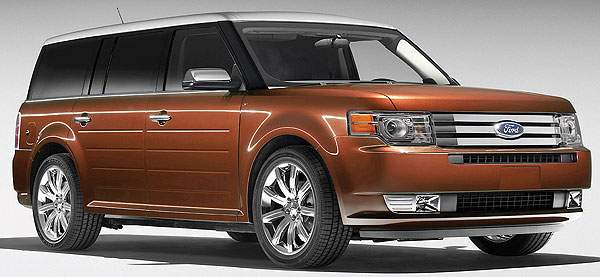
Like the Pontiac G8, Flex probably looked great - on paper - about four years ago, when planning for future production models really begins. Flex's one engine choice is its biggest drawback: a thirsty 262-hp 3.5-liter V6 mated to a 6-speed automatic (16mpg in-town, 22 highway). All-wheel drive is available. Flex would have been a great car - in 2002. Base prices start between $28,000 and $36,000 for 2009 models.
CHEVROLET MALIBU HYBRID
On-sale now.

Malibu's "single-mode" hybrid, with a 2.4-liter 4-cylinder gas engine mated with an electric motor, produces 164-horses and mpg figures of 26 in-town and 34 on the highway. New for 2010 (on-sale late 2009) is rumored to be a Malibu "two-mode" hybrid. That model would use a gasoline 3.6-liter V6 + an electric motor to make 255-hp. Both hybrid systems stop the gas engine at red lights, and the two-mode allows the vehicle to run at low speeds on electric power only. Malibu hybrid prices start at $26K; 2010 pricing hasn't been announced.
CHRYSLER TOWN AND COUNTRY/DODGE GRAND CARAVAN
On-sale now.

When Lee Iacocca was fired from Ford and went to lead Chrysler, he took with him Ford engineer Hal Sperlich, who brought with him a van project that became the first US minivan in 1983. Town & Country and Dodge Grand Caravan still dominate the minivan market, and offer a 3.3-liter V6, a 3.8-liter V6 and a 4.0-liter V6. Some models still have stone age four-speed automatics; others a modern six-speed. 2009 base-prices go from $24,230 to $36,550.
2010 LINCOLN MKZ
On-sale Spring, 2009

Lincoln's 2010 MKZ gets somewhat-new looks inside and outside. MKZ comes with one drivetrain choice: a 263-hp 3.5-liter V6 Duratec engine with a six-speed automatic transmission (similar to Ford's Flex wagon drivetrain). MKZ offers a choice of front- or all-wheel drive. MKZ is easy to spec out, with options kept to an enjoyable minimum. 2010 MKZ is built in Hermosillo, Mexico. 2009 models are base-priced between $32,695 and to $34,585.
2010 CHEVROLET CAMARO
On-sale first quarter 2009 as a 2010 model.

A two-door coupe will add a convertible version in late '09 (Camaro in photo is a convertible prototype). A base 3.6-liter V6 engine produces 300 horsepower. Automatic-equipped SS models get a 6.2-liter V8 making 400 horses and has Active Fuel Management cylinder deactivation (which most owners will switch "off"). SS versions with a manual transmission get a monster 422-horse 6.2-liter V8. Mileage figures and official pricing haven't been announced. Can't wait to see those mileage figures ... and, I'd wager, neither can Congress.
2009 PONTIAC VIBE
On-sale now.

Vibe is built on the same Fremont, California assembly line as its near-twin, Toyota's Matrix. GM shares the factory with Toyota, and New United Motor Manufacturing Inc. (NUMMI) was the first joint venture between GM and an import carmaker. The 2009 Vibe is redesigned inside and out and has more power and other new features, including the return of all-wheel drive, a definite plus. Two engines are offered, a 1.8-liter 132-horsepower four, and a 158-hp 2.4-liter four-cylinder. Mileage ranges from 20 mpg in-town to 26 highway, depending on the model. Base prices range from $16,100 to $20,875.
JEEP WRANGLER
On-sale now.

Jazz is the quintessential American music, and Jeep's Wrangler is the quintessence of American cars. Jeep's logo ties at #1 as most-recognized product symbol worldwide along with Coca-Cola's, and Wrangler and Corvette remain America's most authentic cars. All models have a 3.8-liter V6 engine, making between 202- and 205-horsepower, depending on model. Manual or automatic transmissions are available. "There's nothing like the real thing." Base prices range from $20,460 to $31,840.
Some photos by www.SteveParker.com.
 Detroit, MI (PRWEB)-- The office of DetailXPerts Franchise Systems in Detroit has one goal - to utilize their patent-pending process that protects the environment while delivering excellence in service.
"We are excited to have our first franchisee in the Detroit area," says CEO Emmanuel Williams. The downtown Detroit and Southfield, Michigan franchises are owned by Terry Cleveland, the newest franchisee, Williams continues. "Our franchising efforts allow us to empower others toward business ownership while giving DetailXPerts the opportunity to make a difference in the world," he adds.
According to Terry Cleveland, most people stay at jobs that they hate, because they feel they don't have any other choice. The thought of owning a business can be overpowering, and most people end up abandoning their dream. "As a new business owner, I feel like I'm part of the family. There is a supportive environment and the training program is second to none - it will definitely help me to succeed," Cleveland said.
"DetailXPerts is a flexible business to own and operate, Cleveland commented. I have 2 franchises which give me the right to 5 locations and, I can also service my clients with my mobile unit. I am able to choose how big or small of an operation I desire. This allows me to have control over my income, my time and my lifestyle. With my DetailXPerts' business I plan to create generational wealth for my family."
Prior to opening the downtown Detroit and Southfield, Michigan franchises, Terry Cleveland, 47, born and raised in Detroit, worked for General Motors (GM) for 21 years as a production operator, after leaving GM he became a business consultant, giving him a solid background in automobiles and business management. "After 21 years with GM I had to make a decision for my life and I decided to own a business where I could control my destiny. This is a great opportunity to expand the number of small business-owners in the Detroit area," said Cleveland.
"To create the lifestyle of your dreams, people have to find a business opportunity that fits them, says Emmanuel Williams. The ideal candidates for our franchise are good with people, willing to learn and grow, do not mind getting their hands dirty, and want to be part of a winning team," he adds. "In addition, the close relationship and support we provide creates a unique win-win relationship where the franchise owner is in business for himself but never by himself."
With its Support Center located in Detroit, Michigan, the DetailXPerts Franchise Systems is the world's first eco-friendly vehicle steam cleaning system. Offering a full range of services to people interested in business ownership.
DetailXPerts Franchise Systems provides franchise opportunities to people looking for an educational and family environment using a proven business system.
With DetailXPerts' patent-pending process, they can clean 15 cars with just 2 gallons of water. The U.S. Government Accountability Office predicts 36 states will have water shortage problems by year 2013 and the Entrepreneur Magazine list onsite "waterless" car washes as a 2009 Trend. DetailXPerts has the answer.
For more information, call 313.924.9779 (toll-free 1.877.317.9737), or visit their website at http://www.detailxperts.net/.
 Associated Press
LANSING, Mich. - Gov. Jennifer Granholm and lawmakers hope generous tax incentives will help make Michigan the center of efforts to research and manufacture advanced batteries used in hybrid and electric vehicles.
Legislators say the United States today has no large-scale production plant for the lithium-ion battery, the technology General Motors Corp. expects to power its touted Chevrolet Volt.
Most battery technology is being developed in Asia.
"It is imperative that Michigan possess this technology to keep Michigan the center of car manufacturing," said Sen. John Pappageorge, a Troy Republican. Before adjourning this month, the Legislature approved tax credits worth up to $335 million depending on how many battery packs are assembled here, production expenses and other factors. Granholm is expected to sign the legislation.
Lawmakers were motivated to act at a time auto demand has dropped due to the ailing economy and the credit crunch, which has made it tougher for some buyers to get financing. GM and Chrysler LLC recently secured a $17 billion lifeline from the federal government.
The same week lawmakers voted for the credits, GM announced it was delaying construction of a Flint engine factory to conserve cash. The plant eventually will make 1.4-liter engines for the Chevy Cruze and the Chevy Volt plug-in electric car, key products in the century-old automaker's bid to turn itself around after relying on highly profitable truck and SUV sales.
"That's just temporary," Granholm said. "They are going to produce the Volt. ... The battery that is going to power the Volt -- we intend that to be made in Michigan." GM could make a decision early next year.
The state also is working with a cell manufacturing company to build a facility in Michigan. The governor says the rechargeable lithium battery not only will store energy in people's cars but potentially could be used for their homes and businesses, too.
"All of that we want to make a big play for Michigan," Granholm said. "We want it to be an American solution produced by American workers."
Things are moving quickly on the battery front. Fourteen U.S. technology companies and a national laboratory this month created an alliance to seek billions in federal funding for construction of a plant to make advanced vehicle batteries.
The U.S. will lose out on high-tech jobs if Japan, South Korea and other countries continue dominating battery development, according to the new coalition.
Michigan's tax incentives are similar to those offered the film industry earlier in 2008. To entice moviemakers to choose Michigan over competing states, Granholm and legislators created refundable tax credits for in-state movie production expenses.
Giving tax breaks is nothing new, with the state often deciding to forgo tax revenue in exchange for economic investment and job creation. But refundable credits go further. They are more like a rebate for production expenses and can require the state to cut checks to businesses if the credits exceed their tax liability.
Refundable credits have been castigated by critics such as Sen. Nancy Cassis, a Novi Republican who has said Michigan would be more attractive if it provided "broad-based tax relief ... benefiting all, rather than just a selected few."
The criticism mostly has been ignored. Senators scaled back the battery bill's potential price tag by nearly $200 million before voting 31-3 to pass the legislation. It was approved 94-0 by the House.
Backers say Michigan just cannot afford to miss out on a vehicle battery market that could total $50 billion by 2020. They describe the tax incentives as a "down payment" toward fostering high-tech industries. The battery bill is House Bill 6611.
 The Associated Press
LANSING, Mich. — Gov. Jennifer Granholm has differed in the past with U.S. automakers, squabbling with the United Auto Workers union over party politics and wishing out loud that Michigan’s fortunes weren’t so tied to the ailing industry.
But when detractors in recent weeks portrayed the Big Three as manufacturing dinosaurs that didn’t deserve bridge loans to avoid bankruptcy, Granholm became an impassioned advocate for the industry. "It has been extremely frustrating, and I have probably used some words I should not be using," she said.
The two-term Democratic governor has been a frequent guest on national talk shows and news programs, taking on the naysayers. She has rallied governors worried about losing major factories and suppliers, plotted Capitol Hill strategy with congressional members from Michigan and other states, and sent letters to President George W. Bush.
"The auto industry is seeking only a fraction of what was given to the . . . financial industry and it’s a loan. And that loan is going to ensure that we have a manufacturing infrastructure and 3 million jobs are protected in this nation all across the country, not just in Wall Street but in small communities all over," Granholm said on PBS’ Nightly Business Report this month.
The feisty and hard-charging governor, who ran a half-marathon in less than two hours this fall, is easily angered by injustice, and she thinks that the automakers and her state are being wrongly maligned.
The Senate’s failure to pass a $14 billion bridge loan for General Motors Corp. and Chrysler Llc. — which could run out of money within weeks without assistance — infuriated Granholm, who sits on President-elect Barack Obama’s transition economic advisory board. She accused Senate Republicans who refused to back the bridge loans of "protecting the foreign companies that are in their borders. They’re not acting as Americans."
When former Republican presidential candidate Mitt Romney said during an exchange Sunday with Granholm on NBC’s Meet the Press that U.S. automakers had a cost disadvantage compared with foreign automakers, an impassioned Granholm skewered his comments as inaccurate and pointed a finger at him as she argued over legacy costs.
During an appearance last month on CNN, she accused Romney of "breathtaking hypocrisy" for saying in January during his presidential campaign that he’d be a partner to the automakers and fight for jobs, then arguing in November against giving them the loans.
More than a few television anchors have felt the governor’s polite but pointed displeasure. When CNN’s Kyra Phillips asked why auto companies deserved the bridge loans, Granholm took aim at the financial-sector meltdown and shot back that "it’s really important to know that the auto industry didn’t put us into this position."
She also hasn’t pulled any punches in her news conferences.
"I really felt so deeply for these workers who have felt powerless to be able to change the minds of people in Congress who were spouting untruths about the industry," she said after watching the bridge-loan plan fall apart. "Those who caused this financial meltdown were allowed to walk away with $700 billion, with no oversight, many of them ultra-rich hedge-fund players. Those who were the victims of their greed — people who work on the factory line — were blamed and were asked to pay the price," she added.
Don’t tell her automakers aren’t trying to lower costs to match their foreign competitors or that they haven’t improved quality or taken steps to move more fuel-efficient cars and hybrids.
"The bottom line is, the industry has recognized that it must change," the governor said.