A Prairie Home Companion
February 27, 2010 // Show #1242
This week on A Prairie Home Companion, it's a soulful live broadcast performance from the Fox Theatre in Detroit, Michigan. With soul writing and performing legend "Sir" Mack Rice, the Great Lady of Soul, Bettye LaVette, and sisters Jearlyn and Jevetta Steele. Also with us, organist John Lauter; The Guy's All-Star Shoe Band; Richard Dworsky, Pat Donohue, Gary Raynor, Andy Stein, and Peter Johnson, The Royal Academy of Radio Actors; Tim Russell, Sue Scott, and Fred Newman, and the latest News from Lake Wobegon.
Siri Agrell
The Globe and Mail
The corner of Brush Street and General Motors Boulevard is not the place you expect to see something beautiful. A row of abandoned houses droop in the snow, their windows broken and doors boarded up. Empty lots are overgrown with weeds and a fleet of police cars lines a fenced-in lot, ready for action in a neighbourhood where crime is the main inhabitant. There are no snowy footprints on the sidewalk, and a dingy gas station goes unvisited. But on the side of a nine-storey warehouse a huge mural cuts through the palpable gloom, more than 10,000 square feet of sky blue streaming drips of red, purple, orange and yellow down the building's western wall.
The Illuminated Mural was painted last August by artist Katie Craig, part of a citywide initiative that allowed six Detroit communities to commission large-scale works of art for their neighbourhoods.
Years of decay and decline have turned Detroit's downtown core into a ghost town, miles of crumbling houses, empty lots and boarded-up businesses creating an apocalyptic zone of nothingness between the central business district and the still-vibrant suburbs.
But a community of artists has moved into the void, drawn by the promise of cheap real estate and free rein.
Some of their projects are done in partnership with local businesses and cultural institutions, desperate to put a more attractive face on their blighted city, but others have adopted a guerrilla approach, taking over decrepit spaces only an artist could love. Together, the work is redefining a city best known for its dying automotive industry and Eminem's 8 Mile, and suggests that it may just be possible for a city to save itself with art.
The most visible of Detroit's artistic makeovers have utilized the city's most abundant found material: abandoned buildings.
Recently, two New York transplants covered a deserted house with water, transforming it into a glittering monument to decay called The Ice House. The work follows in the footsteps of Object Orange, in which a group of anonymous art students painted abandoned properties in bright orange paint, highlighting empty properties that had been left to rot, and expediting the demolition of many buildings by city authorities.
Another nameless crew draped blue flags from the windows of an empty building that was once Michigan Central Station. And when Olayame Dabls bought an empty building next to his store, the African Bead Museum, he responded to a city order to board it up by covering the exterior with a mosaic of mirrored glass, iron and wood.
“There's guerrilla art going on here. It's quite amazing,” said Richard Rogers, president of the College for Creative Studies, a college of art and design. “Artists are moving in from other parts of the world to experience this energy that seems to be developing.”
He moved from New York City 10 years ago, much to the surprise of his friends. People think of Detroit as decayed, destroyed, post-apocalyptic, he said, and largely beyond repair. “Artists don't really look at things that way,” he said. “Artists go into places that other people aren't interested in and transform them.”
The artistic vision for Detroit can be traced back to Heidelberg Street, where Tyree Guyton began an installation nearly 25 years ago transforming his childhood neighbourhood into a walkable museum.
His work exists in the midst of a huge residential wasteland, where more than 90 per cent of homes are abandoned. He has turned the street into some sort of Disney park gone wrong, with trees hung with shopping carts and a rowboat stacked with rotting stuffed toys. One home is covered in brightly coloured numbers, to help local children learn to count, and a residence known as the Dotty Wotty House is covered in bright circles of colour.
In the 1990s, the city twice attempted to demolish the work, but Mr. Guyton has since registered the Heidelberg Project as a non-profit, one that now employs three full-time and two part-time staff. They have 30 volunteers, a swarm of interns and a lead designer on loan from the University of Michigan. What once was seen as an eyesore is now viewed as a template for revival. Executive director Jenenne Whitfield, Mr. Guyton's wife, says the project draws 250,000 visitors a year, making it Detroit's third-largest tourist destination. Last summer, a group of European tourists held a picnic in the middle of the street.
But the aim is not just to become an outdoor gallery. Ms. Whitfield says they want to rebuild the community around the art. Already, two artists have moved onto the street, and Ms. Whitfield hopes that more will follow, and signs of life will spread outward from the project. “As far as I'm concerned, Detroit is a blank canvas,” she said. “We're infusing energy into a community that has lost hope.”
Artist Mitch Cope did not think of his hometown as a worthy palette when he was growing up, but during a brief western sojourn for graduate school, he could think only of projects that would improve Detroit.
In 2005, he and his wife, Gina Reichert, bought a home in the city for less than $2,000 and transformed the ramshackle property into a brightly coloured artist studio that is completely off the grid, powered by solar panels. The couple now own three houses and two additional lots, and have been recruiting artists from Germany, Chicago and San Francisco with the promise of homes as cheap as $100 and the ability to work outside the system.
“They come here because they see those cities as being unmovable,” he said of his friends. “You have to have a normal job in order to survive and you can't do anything a little more creative or offline.”
Although Mr. Cope and his wife go about most of their work unbothered by bureaucracy, they have been given the tacit support of a city with nothing to lose. One official from the mayor's office said he could not provide funding, but would take care of any local crime. Mr. Cope sent the man a list of nearby drug houses, which were raided by police the very next day.
Having hit rock bottom, Detroit is game to try something new, and there is a willingness to partner with artists that does not exist in other cities.
For years, the maze of buildings that make up the Russell Industrial Center sat empty, more than a million square feet of industrial space that once housed an auto-body supplier owned by Henry and Leona Helmsley. In the early 2000s, a new owner tried to find a manufacturer to move in, before realizing he could fill the space by renting individual studios to local artists. The centre is now home to photographers and musicians, film studios and architects, glassblowers and graphic designers.
Individual artists are not the only ones who see creativity as a means to improve Detroit's lot. Large-scale cultural projects have also been drawing attention to the city, and helping to establish its reputation on the international art scene.
The Detroit Institute of Art was renovated in 2007, receiving an additional 77,000 square feet to house its billion-dollar collection. The Museum of Contemporary Art Detroit opened in 2006 in a former car dealership, and the Kresge Foundation, a local philanthropic force, has begun issuing grants to 18 individual artists each year. A group called Detroit Renaissance has poured $50-million into the Creative Corridor project, which will fund artistic endeavours down Woodward Avenue, the city's downtown thoroughfare.
And last year, the College for Creative Studies took over General Motors' former engineering and design building, giving it a $145-million renovation to create a secondary campus, which houses undergraduate design programs as well as an art-focused charter school. In 2009, the college experienced its highest enrolment numbers to date.
“I think there's a very strong recognition of the role of art in moving the transformation along,” said Mr. Rogers.
He believes Detroit is following in the footsteps of places such as the SoHo neighbourhood of New York and Berlin, where artists moved into the void left by industry and created vibrant communities.
But, for the transformation to flourish, Mr. Rogers warns that artists cannot feel co-opted by the redevelopment movement. “To some extent, artists prefer to operate outside,” he said. “As soon as the mainstream recognizes them, it's over and they move on elsewhere.”
The city's pull shows no sign of waning. Mr. Cope says he receives daily correspondence from artists around the world inquiring about the city, and how they can buy a house for less than $1,000. He encourages them all to come, but he takes a skeptical view of those who arrive without a community-improvement angle. He views The Ice House and Object Orange as dilettante excursions into the city by artists with no real message or motive. And he hopes Detroit draws creative minds who want to improve the city's portfolio, as well as their own.
“Instead of doing something that results in getting a house torn down, why don't you do something that results in a house being fixed up?” he said. “It's an end not a beginning.”
And he is sure to warn his friends that Detroit is not an easy place to live. Yes, you can take over whole neighbourhoods as a canvas for your work, but finding a decent cup of coffee is not so easy. That said, he is glad Detroit is now being seen as an artistic draw.
“It's okay to be romantic about it,” he said. “For a long time, people just wanted to get away from here.”
The Globe and Mail
The corner of Brush Street and General Motors Boulevard is not the place you expect to see something beautiful. A row of abandoned houses droop in the snow, their windows broken and doors boarded up. Empty lots are overgrown with weeds and a fleet of police cars lines a fenced-in lot, ready for action in a neighbourhood where crime is the main inhabitant. There are no snowy footprints on the sidewalk, and a dingy gas station goes unvisited. But on the side of a nine-storey warehouse a huge mural cuts through the palpable gloom, more than 10,000 square feet of sky blue streaming drips of red, purple, orange and yellow down the building's western wall.
The Illuminated Mural was painted last August by artist Katie Craig, part of a citywide initiative that allowed six Detroit communities to commission large-scale works of art for their neighbourhoods.
Years of decay and decline have turned Detroit's downtown core into a ghost town, miles of crumbling houses, empty lots and boarded-up businesses creating an apocalyptic zone of nothingness between the central business district and the still-vibrant suburbs.
But a community of artists has moved into the void, drawn by the promise of cheap real estate and free rein.
Some of their projects are done in partnership with local businesses and cultural institutions, desperate to put a more attractive face on their blighted city, but others have adopted a guerrilla approach, taking over decrepit spaces only an artist could love. Together, the work is redefining a city best known for its dying automotive industry and Eminem's 8 Mile, and suggests that it may just be possible for a city to save itself with art.
The most visible of Detroit's artistic makeovers have utilized the city's most abundant found material: abandoned buildings.
Recently, two New York transplants covered a deserted house with water, transforming it into a glittering monument to decay called The Ice House. The work follows in the footsteps of Object Orange, in which a group of anonymous art students painted abandoned properties in bright orange paint, highlighting empty properties that had been left to rot, and expediting the demolition of many buildings by city authorities.
Another nameless crew draped blue flags from the windows of an empty building that was once Michigan Central Station. And when Olayame Dabls bought an empty building next to his store, the African Bead Museum, he responded to a city order to board it up by covering the exterior with a mosaic of mirrored glass, iron and wood.
“There's guerrilla art going on here. It's quite amazing,” said Richard Rogers, president of the College for Creative Studies, a college of art and design. “Artists are moving in from other parts of the world to experience this energy that seems to be developing.”
He moved from New York City 10 years ago, much to the surprise of his friends. People think of Detroit as decayed, destroyed, post-apocalyptic, he said, and largely beyond repair. “Artists don't really look at things that way,” he said. “Artists go into places that other people aren't interested in and transform them.”
The artistic vision for Detroit can be traced back to Heidelberg Street, where Tyree Guyton began an installation nearly 25 years ago transforming his childhood neighbourhood into a walkable museum.
His work exists in the midst of a huge residential wasteland, where more than 90 per cent of homes are abandoned. He has turned the street into some sort of Disney park gone wrong, with trees hung with shopping carts and a rowboat stacked with rotting stuffed toys. One home is covered in brightly coloured numbers, to help local children learn to count, and a residence known as the Dotty Wotty House is covered in bright circles of colour.
In the 1990s, the city twice attempted to demolish the work, but Mr. Guyton has since registered the Heidelberg Project as a non-profit, one that now employs three full-time and two part-time staff. They have 30 volunteers, a swarm of interns and a lead designer on loan from the University of Michigan. What once was seen as an eyesore is now viewed as a template for revival. Executive director Jenenne Whitfield, Mr. Guyton's wife, says the project draws 250,000 visitors a year, making it Detroit's third-largest tourist destination. Last summer, a group of European tourists held a picnic in the middle of the street.
But the aim is not just to become an outdoor gallery. Ms. Whitfield says they want to rebuild the community around the art. Already, two artists have moved onto the street, and Ms. Whitfield hopes that more will follow, and signs of life will spread outward from the project. “As far as I'm concerned, Detroit is a blank canvas,” she said. “We're infusing energy into a community that has lost hope.”
Artist Mitch Cope did not think of his hometown as a worthy palette when he was growing up, but during a brief western sojourn for graduate school, he could think only of projects that would improve Detroit.
In 2005, he and his wife, Gina Reichert, bought a home in the city for less than $2,000 and transformed the ramshackle property into a brightly coloured artist studio that is completely off the grid, powered by solar panels. The couple now own three houses and two additional lots, and have been recruiting artists from Germany, Chicago and San Francisco with the promise of homes as cheap as $100 and the ability to work outside the system.
“They come here because they see those cities as being unmovable,” he said of his friends. “You have to have a normal job in order to survive and you can't do anything a little more creative or offline.”
Although Mr. Cope and his wife go about most of their work unbothered by bureaucracy, they have been given the tacit support of a city with nothing to lose. One official from the mayor's office said he could not provide funding, but would take care of any local crime. Mr. Cope sent the man a list of nearby drug houses, which were raided by police the very next day.
Having hit rock bottom, Detroit is game to try something new, and there is a willingness to partner with artists that does not exist in other cities.
For years, the maze of buildings that make up the Russell Industrial Center sat empty, more than a million square feet of industrial space that once housed an auto-body supplier owned by Henry and Leona Helmsley. In the early 2000s, a new owner tried to find a manufacturer to move in, before realizing he could fill the space by renting individual studios to local artists. The centre is now home to photographers and musicians, film studios and architects, glassblowers and graphic designers.
Individual artists are not the only ones who see creativity as a means to improve Detroit's lot. Large-scale cultural projects have also been drawing attention to the city, and helping to establish its reputation on the international art scene.
The Detroit Institute of Art was renovated in 2007, receiving an additional 77,000 square feet to house its billion-dollar collection. The Museum of Contemporary Art Detroit opened in 2006 in a former car dealership, and the Kresge Foundation, a local philanthropic force, has begun issuing grants to 18 individual artists each year. A group called Detroit Renaissance has poured $50-million into the Creative Corridor project, which will fund artistic endeavours down Woodward Avenue, the city's downtown thoroughfare.
And last year, the College for Creative Studies took over General Motors' former engineering and design building, giving it a $145-million renovation to create a secondary campus, which houses undergraduate design programs as well as an art-focused charter school. In 2009, the college experienced its highest enrolment numbers to date.
“I think there's a very strong recognition of the role of art in moving the transformation along,” said Mr. Rogers.
He believes Detroit is following in the footsteps of places such as the SoHo neighbourhood of New York and Berlin, where artists moved into the void left by industry and created vibrant communities.
But, for the transformation to flourish, Mr. Rogers warns that artists cannot feel co-opted by the redevelopment movement. “To some extent, artists prefer to operate outside,” he said. “As soon as the mainstream recognizes them, it's over and they move on elsewhere.”
The city's pull shows no sign of waning. Mr. Cope says he receives daily correspondence from artists around the world inquiring about the city, and how they can buy a house for less than $1,000. He encourages them all to come, but he takes a skeptical view of those who arrive without a community-improvement angle. He views The Ice House and Object Orange as dilettante excursions into the city by artists with no real message or motive. And he hopes Detroit draws creative minds who want to improve the city's portfolio, as well as their own.
“Instead of doing something that results in getting a house torn down, why don't you do something that results in a house being fixed up?” he said. “It's an end not a beginning.”
And he is sure to warn his friends that Detroit is not an easy place to live. Yes, you can take over whole neighbourhoods as a canvas for your work, but finding a decent cup of coffee is not so easy. That said, he is glad Detroit is now being seen as an artistic draw.
“It's okay to be romantic about it,” he said. “For a long time, people just wanted to get away from here.”
Each spring, the young professionals group of the Michigan Opera Theatre Volunteer Association (MOTVA) plans and executes one of the most successful and highly anticipated cultural events of the year. BravoBravo! brings together the very best of Detroit.
The event highlights the city's top restaurants, showcases its best live musical acts and brings together thousands of revelers all in support of Michigan Opera Theatre (MOT). This year BravoBravo!, presented by Bank of America, will run from 7:30 p.m. to 12:30 a.m. Friday, June 4, 2010 at the Detroit Opera House, 1526 Broadway, in Detroit.
In its 11th year, BravoBravo! takes on a fashion theme, showcasing an artistic industry that has long lived under the radar in Detroit. Experience Haute Couture with a Detroit edge as it moves off the runway and inside the corridors of the opulent Detroit Opera House. This year's event is co-chaired by three of Detroit's most involved young professionals: Jerrid Mooney, Jen Knapp, and Rich Rice.
Events like BravoBravo! are crucial to the continued success and daily operation of Michigan Opera Theatre. In 2009, BravoBravo! drew a record crowd of over 2,000 young professionals and raised over $180,000 to support MOT.
This year organizers hope to surpass those efforts and reach a goal of $250,000 to support MOT's artistic and educational programs. Since its inception, BravoBravo! has raised more than $833,000 and is considered a crucial fundraising effort for Michigan Opera Theatre.
Tickets for this year's event are $85 in advance and will go on sale April 1, 2010. VIP tickets are available for $125 and include valet parking and early admission at 6:30 p.m. Purchase tickets at the Detroit Opera House box office, by phone at (313) 237-SING, or online at www.MichiganOpera.org. The event is expected to sell out.
Media interested in covering the event should request credentials no later than Tuesday, June 1, 2010 by contacting Rebekah Johnson at rjohnson@motopera.org.
BravoBravo! attendees must be 21 or older. Sponsorship opportunities are available; please contact Michelle DeLand for sponsorship information at (313) 237-3402 or mdeland@motopera.org.
More information, including participating restaurants and entertainment details, will be announced as the event draws closer. For a video preview, photos, and more information on BravoBravo! please visit www.bravobravo.org.
The event highlights the city's top restaurants, showcases its best live musical acts and brings together thousands of revelers all in support of Michigan Opera Theatre (MOT). This year BravoBravo!, presented by Bank of America, will run from 7:30 p.m. to 12:30 a.m. Friday, June 4, 2010 at the Detroit Opera House, 1526 Broadway, in Detroit.
In its 11th year, BravoBravo! takes on a fashion theme, showcasing an artistic industry that has long lived under the radar in Detroit. Experience Haute Couture with a Detroit edge as it moves off the runway and inside the corridors of the opulent Detroit Opera House. This year's event is co-chaired by three of Detroit's most involved young professionals: Jerrid Mooney, Jen Knapp, and Rich Rice.
Events like BravoBravo! are crucial to the continued success and daily operation of Michigan Opera Theatre. In 2009, BravoBravo! drew a record crowd of over 2,000 young professionals and raised over $180,000 to support MOT.
This year organizers hope to surpass those efforts and reach a goal of $250,000 to support MOT's artistic and educational programs. Since its inception, BravoBravo! has raised more than $833,000 and is considered a crucial fundraising effort for Michigan Opera Theatre.
Tickets for this year's event are $85 in advance and will go on sale April 1, 2010. VIP tickets are available for $125 and include valet parking and early admission at 6:30 p.m. Purchase tickets at the Detroit Opera House box office, by phone at (313) 237-SING, or online at www.MichiganOpera.org. The event is expected to sell out.
Media interested in covering the event should request credentials no later than Tuesday, June 1, 2010 by contacting Rebekah Johnson at rjohnson@motopera.org.
BravoBravo! attendees must be 21 or older. Sponsorship opportunities are available; please contact Michelle DeLand for sponsorship information at (313) 237-3402 or mdeland@motopera.org.
More information, including participating restaurants and entertainment details, will be announced as the event draws closer. For a video preview, photos, and more information on BravoBravo! please visit www.bravobravo.org.
Toby Barlow
New York Times
Ron and Patty Cooley met and fell in love 42 years ago as students at Eastern Michigan University. After a stint at Ford in the early ’70s, they left Detroit behind, taking over her family’s modest real estate business upstate. The company prospered: for 30 years the two worked together, helping to finance, build and sell more than 1,000 homes.
With their two sons grown, Ron and Patty sold the business and semi-retired down to Naples, Fla. Ron took up golf, sometimes seven days a week, occasionally 36 holes in a day. Patty gardened. Their lives in the Sunshine State were relaxed and tranquil, the sort of serene ending that retirement brochures promise to us all. But, unsurprisingly, the collapse of the housing market had a serious impact on a couple with a nest egg tied up in real estate.
Ron and Patty looked around and did the math. Florida’s economy seemed to be declining even more steeply than the Motor City’s. In Detroit, they had roots, their sons had moved into the city and started a barbecue restaurant, grandchildren had arrived. So, weighing their options, they came back. They moved into a downtown loft, just a few blocks from the empty lot where Tiger Stadium once stood.
I first encountered Ron and Patty at an early morning fund-raiser for a neighborhood charity. Talking to them, I found that just like other new arrivals — the artists and recent college graduates coming here from other towns — they spoke of Detroit’s potential with an almost exalted optimism. Instead of depressing or slowing them down, the move has been a thrilling one and they shared examples of how exhilarating their life is downtown.
Being at the center of things means they can walk to the Avalon bakery on Saturday mornings and to the new Comerica Park for baseball games in the spring. Instead of endless golf, they now go to events like the fund-raiser where we met or lectures on design and sustainable development.
Talking about Florida, Ron sounds like someone who made it onto the lifeboat in the nick of time. Yes, they had to sell their home down there at a loss, but a former neighbor in Naples recently sold a similar house for less than half of what the Cooleys got. Ron estimates that with the nation’s battered 401(k) accounts, it could take decades before Florida returns to any sort of substantial growth.
Meanwhile, Patty and Ron are helping their sons expand their restaurant to a new location. Patty is involved in the local school system’s literacy program. Ron enjoys walking down the street to spend time with his grandchildren, the kind of time that, in his ambitious, younger days, he didn’t get to have with his own boys.
In the nation’s shared imagination, Detroit continues to be worse than a punch line — it’s an apocalyptic wasteland teetering right at the edge of the end of the world. When people hear that I live downtown, they ask, “Where do you get your groceries?” and “Where do you get your dry cleaning done?” and when I answer “Well, at the grocery store and the dry cleaners,” they simply look confused. In fact, few can imagine living a life here.
The truth is that my Detroit — and Ron and Patty’s Detroit — might no longer be a city where dreams come true the way they once did. But this story still demonstrates some important things: how lives and businesses can thrive here, how rewarding it can be to have family close and, at the very least, how nice it is that we’re not in Florida.
Ron and Patty Cooley met and fell in love 42 years ago as students at Eastern Michigan University. After a stint at Ford in the early ’70s, they left Detroit behind, taking over her family’s modest real estate business upstate. The company prospered: for 30 years the two worked together, helping to finance, build and sell more than 1,000 homes.
With their two sons grown, Ron and Patty sold the business and semi-retired down to Naples, Fla. Ron took up golf, sometimes seven days a week, occasionally 36 holes in a day. Patty gardened. Their lives in the Sunshine State were relaxed and tranquil, the sort of serene ending that retirement brochures promise to us all. But, unsurprisingly, the collapse of the housing market had a serious impact on a couple with a nest egg tied up in real estate.
Ron and Patty looked around and did the math. Florida’s economy seemed to be declining even more steeply than the Motor City’s. In Detroit, they had roots, their sons had moved into the city and started a barbecue restaurant, grandchildren had arrived. So, weighing their options, they came back. They moved into a downtown loft, just a few blocks from the empty lot where Tiger Stadium once stood.
I first encountered Ron and Patty at an early morning fund-raiser for a neighborhood charity. Talking to them, I found that just like other new arrivals — the artists and recent college graduates coming here from other towns — they spoke of Detroit’s potential with an almost exalted optimism. Instead of depressing or slowing them down, the move has been a thrilling one and they shared examples of how exhilarating their life is downtown.
Being at the center of things means they can walk to the Avalon bakery on Saturday mornings and to the new Comerica Park for baseball games in the spring. Instead of endless golf, they now go to events like the fund-raiser where we met or lectures on design and sustainable development.
Talking about Florida, Ron sounds like someone who made it onto the lifeboat in the nick of time. Yes, they had to sell their home down there at a loss, but a former neighbor in Naples recently sold a similar house for less than half of what the Cooleys got. Ron estimates that with the nation’s battered 401(k) accounts, it could take decades before Florida returns to any sort of substantial growth.
Meanwhile, Patty and Ron are helping their sons expand their restaurant to a new location. Patty is involved in the local school system’s literacy program. Ron enjoys walking down the street to spend time with his grandchildren, the kind of time that, in his ambitious, younger days, he didn’t get to have with his own boys.
In the nation’s shared imagination, Detroit continues to be worse than a punch line — it’s an apocalyptic wasteland teetering right at the edge of the end of the world. When people hear that I live downtown, they ask, “Where do you get your groceries?” and “Where do you get your dry cleaning done?” and when I answer “Well, at the grocery store and the dry cleaners,” they simply look confused. In fact, few can imagine living a life here.
The truth is that my Detroit — and Ron and Patty’s Detroit — might no longer be a city where dreams come true the way they once did. But this story still demonstrates some important things: how lives and businesses can thrive here, how rewarding it can be to have family close and, at the very least, how nice it is that we’re not in Florida.
Gary Stoller
USA Today
Three airports in the Midwest scored the highest of all North American airports in customer satisfaction, a J.D. Power and Associates survey released Thursday says.
Detroit Metropolitan Wayne County was named the best large airport, Kansas City International the best midsize airport and Indianapolis International the best small airport.
The survey was based on responses from more than 12,000 passengers who flew on a round-trip flight last year. Airports were judged on six factors: accessibility, the check-in and baggage-check process, baggage claim, terminal facilities, security check, and food and retail services. It's J.D. Power's first airport survey in two years.
"Airports that rated the highest are raising the performance bar," says Stuart Greif, a J.D. Power vice president. "They exceeded the scores of the highest-rated airports in our last study two years ago."
Indianapolis airport, a new facility that opened in November 2008, received the highest satisfaction score this year — 777 on a 1,000-point scale. Kansas City scored 742 and Detroit, 705.
The combined satisfaction score for all North American airports averaged 690 — an improvement from 675 in 2008. The score, though, was considerably lower than customer satisfaction scores last year for hotels and rental cars in two other J.D. Power studies. Hotels averaged 756 and rental cars, 733.
AIRPORT GUIDES: How to navigate the top 25 US airports
This year's airport survey found that the areas that most affected passenger satisfaction are speed of baggage delivery, ease of check-in and bag check, comfort in terminals and amount of time to pass through security.
"For many passengers, basic needs such as seating comfort and ease of moving through the airport are not consistently being met," Greif says.
Passengers spend more at shops in airports with high satisfaction scores, the study also found.
Retail spending averages $14.12 for passengers disappointed with their airport experience and $20.55 for passengers delighted with their airport experience, the study says.
Passengers generally give higher satisfaction scores to smaller airports, which usually have less congestion than larger ones, Greif says.
Indianapolis airport handled 7.5 million passengers last year, compared with 31.4 million at Detroit's big airport.
Some other big airports that posted high satisfaction scores were Denver, Minneapolis and Orlando. Scoring lowest among big airports were Newark, Los Angeles and Miami.
Much of the credit for Detroit's top ranking among big airports goes to airlines and Travelers Aid volunteers, says Lester Robinson, CEO of the Wayne County Airport Authority, which operates the airport.
The airlines "committed themselves" to improve on-time flight performance and luggage handling, and the volunteers "work so hard on the front line every day to help make the travel experience in Detroit as pleasant as possible," he says.
USA Today
Three airports in the Midwest scored the highest of all North American airports in customer satisfaction, a J.D. Power and Associates survey released Thursday says.
Detroit Metropolitan Wayne County was named the best large airport, Kansas City International the best midsize airport and Indianapolis International the best small airport.
The survey was based on responses from more than 12,000 passengers who flew on a round-trip flight last year. Airports were judged on six factors: accessibility, the check-in and baggage-check process, baggage claim, terminal facilities, security check, and food and retail services. It's J.D. Power's first airport survey in two years.
"Airports that rated the highest are raising the performance bar," says Stuart Greif, a J.D. Power vice president. "They exceeded the scores of the highest-rated airports in our last study two years ago."
Indianapolis airport, a new facility that opened in November 2008, received the highest satisfaction score this year — 777 on a 1,000-point scale. Kansas City scored 742 and Detroit, 705.
The combined satisfaction score for all North American airports averaged 690 — an improvement from 675 in 2008. The score, though, was considerably lower than customer satisfaction scores last year for hotels and rental cars in two other J.D. Power studies. Hotels averaged 756 and rental cars, 733.
AIRPORT GUIDES: How to navigate the top 25 US airports
This year's airport survey found that the areas that most affected passenger satisfaction are speed of baggage delivery, ease of check-in and bag check, comfort in terminals and amount of time to pass through security.
"For many passengers, basic needs such as seating comfort and ease of moving through the airport are not consistently being met," Greif says.
Passengers spend more at shops in airports with high satisfaction scores, the study also found.
Retail spending averages $14.12 for passengers disappointed with their airport experience and $20.55 for passengers delighted with their airport experience, the study says.
Passengers generally give higher satisfaction scores to smaller airports, which usually have less congestion than larger ones, Greif says.
Indianapolis airport handled 7.5 million passengers last year, compared with 31.4 million at Detroit's big airport.
Some other big airports that posted high satisfaction scores were Denver, Minneapolis and Orlando. Scoring lowest among big airports were Newark, Los Angeles and Miami.
Much of the credit for Detroit's top ranking among big airports goes to airlines and Travelers Aid volunteers, says Lester Robinson, CEO of the Wayne County Airport Authority, which operates the airport.
The airlines "committed themselves" to improve on-time flight performance and luggage handling, and the volunteers "work so hard on the front line every day to help make the travel experience in Detroit as pleasant as possible," he says.
Bloomfield Hills residents Charlie White, 22 and partner Meryl Davis, 23 are competing in three events in Vancouver over the next couple of day. In the last event, Charlie will be wearing the outfit made by my personal seamstress and Troy Resident, Marianne Balogh (see below).
The schedule is as follows:
NBC
Fri, Feb. 19 8-11:30 PM EST:
Figure Skating (Ice Dance) men's skiiing
Compulsory Competition - Waltz or Tango routine
Sun, Feb. 21 7-11:00 PM EST:
Figure Skating (Ice Dance) women's speedskating, men's bobsleigh
Original Competition - Indian routine
Mon.,Feb. 22 8 PM-Midnight EST:
Figure Skating (Ice Dance), men's freestyle skiing
Free Dance Competition - "Phantom of the Opera" routine
Be sure to watch and cheer on our U.S.A. #1 team go for the gold!
You can contact Marianne Balogh, owner of Style by Marianne at balogh.marianne@gmail.com
Nikki Stephan
Most of us have friends or colleagues who recently lost their job. Unfortunately, job losses are extremely prevalent in our beloved mitten state. Coupled with job losses, there are many recent graduates who are struggling to find jobs.
If you’re a PR professional on Twitter, you may have seen all the recent tweets about “Help a PR Pro Out” day. I noticed there were no champions from Michigan supporting this awesome initiative, so I’ve jumped on board.
On Friday, February 19, from 10 am – 2 pm CT, PR bloggers, agency leaders and PR professionals from across the country will donate their time and talents to help fellow PR pros connect with employers as part of the first-ever HAPPO day. Here’s the breakdown from co-founder Arik Hanson (the other co-founder is Valerie Simon):
Are you a job seeker? Prepare a creative blog post, pitching yourself to prospective employers and share it via Twitter during the event on Feb. 19 using the hashtag #HAPPO. The HAPPO “market champions” will help by retweeting and connecting you with potential employers in your specific market (or markets you’re willing to relocated to).
Are you an employer looking for talent? Follow the hashtag #HAPPO on Friday, Feb. 19 and share your openings. Market champions will do their best to connect you with talent they think matches your specific needs.
Are you a PR blogger/Twitter addict? Yes? Then share the #HAPPO tweets with your personal networks and lend your support to those in need. Help your market champion identify job seekers and pair them with potential employers. This is your chance to make a difference!
If you’re looking for a job but prefer to do so offline, please contact me or one of the HAPPO champions.
HAPPO represents a chance for us all to make a difference for colleagues, former co-workers and friends looking for a job. Think of this as a “pay it forward” movement. With the help of the global PR community, we can make a significant difference for PR job seekers everywhere. Even if our efforts only help one person in Michigan find a job, I will still consider this a success, particularly because of the momentum this initiative has gained.
You can find more information and ongoing updates leading up to the February 19 event at www.helpaprproout.com. If you’re a PR pro in Michigan (heck, even if you’re not), please consider helping to spread the word about HAPPO throughout the week. Let’s all work together to make this a success!
Image credit: HAPPO Web site
Most of us have friends or colleagues who recently lost their job. Unfortunately, job losses are extremely prevalent in our beloved mitten state. Coupled with job losses, there are many recent graduates who are struggling to find jobs.
If you’re a PR professional on Twitter, you may have seen all the recent tweets about “Help a PR Pro Out” day. I noticed there were no champions from Michigan supporting this awesome initiative, so I’ve jumped on board.
On Friday, February 19, from 10 am – 2 pm CT, PR bloggers, agency leaders and PR professionals from across the country will donate their time and talents to help fellow PR pros connect with employers as part of the first-ever HAPPO day. Here’s the breakdown from co-founder Arik Hanson (the other co-founder is Valerie Simon):
Are you a job seeker? Prepare a creative blog post, pitching yourself to prospective employers and share it via Twitter during the event on Feb. 19 using the hashtag #HAPPO. The HAPPO “market champions” will help by retweeting and connecting you with potential employers in your specific market (or markets you’re willing to relocated to).
Are you an employer looking for talent? Follow the hashtag #HAPPO on Friday, Feb. 19 and share your openings. Market champions will do their best to connect you with talent they think matches your specific needs.
Are you a PR blogger/Twitter addict? Yes? Then share the #HAPPO tweets with your personal networks and lend your support to those in need. Help your market champion identify job seekers and pair them with potential employers. This is your chance to make a difference!
If you’re looking for a job but prefer to do so offline, please contact me or one of the HAPPO champions.
HAPPO represents a chance for us all to make a difference for colleagues, former co-workers and friends looking for a job. Think of this as a “pay it forward” movement. With the help of the global PR community, we can make a significant difference for PR job seekers everywhere. Even if our efforts only help one person in Michigan find a job, I will still consider this a success, particularly because of the momentum this initiative has gained.
You can find more information and ongoing updates leading up to the February 19 event at www.helpaprproout.com. If you’re a PR pro in Michigan (heck, even if you’re not), please consider helping to spread the word about HAPPO throughout the week. Let’s all work together to make this a success!
Image credit: HAPPO Web site
This Old House
The Villages, Detroit, Michigan
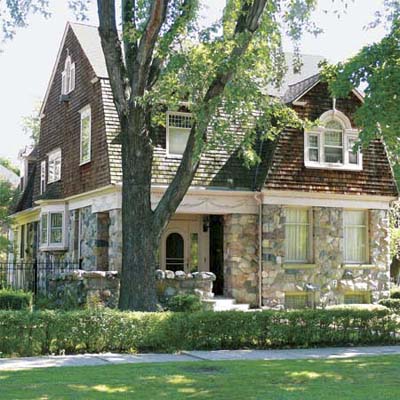
Yeah, times are tough in Detroit. Still, we can't overlook its bargain-hunter's bounty of architectural riches—just one reason we're betting on the city's survival. Although the Motor City's economy is in tatters, the people who live in The Villages, a collection of six historic neighborhoods three miles east of downtown, remain upbeat. "There's a richness in this neighborhood," says resident Kathy Beltaire. "The houses are beautiful and the streets are walkable, but the people here are the best part—they really care." These days, nice-as-can-be multigenerational families who have lived here for decades continue to welcome first-time buyers who appreciate intricate woodwork, front porches, and spacious urban yards. If you can nail down a job in this city's tough economy, your money goes a long way here.
The Houses
The Villages offers more than 17 architectural styles, from Craftsman to Richardsonian Romanesque. The largest, most elaborate homes are in Indian Village, where prominent Detroit architects Albert Kahn and William Stratton designed grand Georgian Revival and Federal Revival homes for the city's first auto barons in the early 1900s. Smaller cottages and rowhouses can be found in nearby West Village. Whatever your tastes, there are houses to be had in The Villages for less than $100,000.
Why Buy Now?
Not only will you get more house for your buck, you may just help fuel a Motor City comeback. That comeback already has a strong human foundation, thanks in part to the commitment of The Villages residents, who continue to mow the lawns and maintain the shrubs of the neighborhood's empty and foreclosed homes, anticipating they'll one day attract future neighbors.
Panera Bread of Southeast Michigan, in partnership with United Way for Southeastern Michigan, is encouraging metro Detroit residents to volunteer with their joint program called “Impact Your Neighborhood.”
The regional initiative aims to build healthier, stronger communities and runs through November 2010. Volunteers may register for individual projects by visiting www.LiveUnitedSEM.org.
Participating Panera Bread project locations include bakery-cafes across metro Detroit. Prior to each project, the designated bakery-cafe will host a breakfast and informational session. Volunteers will also receive a complimentary T-Shirt and a Panera Bread catered lunch upon project completion.
Volunteer opportunities include:
· Saturday, Feb. 20 | 9 a.m. – 1 p.m. at the Baldwin Center in Pontiac. Up to 20 pre-registered volunteers will meet at 9 a.m. at the Orion Panera Bread, located at 4804 S. Baldwin Rd. Volunteers will then travel to the Baldwin Center to assist with sorting donations.
· Saturday, March 6 | 9 a.m. – 1 p.m. at Starfish Family Services in Inkster. Up to 20 pre-registered volunteers will meet at 9 a.m. at the Panera Bread located at 26580 Ford Rd. in Dearborn Heights. Volunteers will then travel to Starfish, where they will put together storage units and paint murals for Head Start classrooms.
· Saturday, April 24 | 9 a.m. – 1 p.m. at Solid Ground in Roseville. Up to 20 pre-registered volunteers will meet at 9 a.m. at the Roseville bakery-cafe located at 31960 Gratiot Ave. Volunteers will then travel to Solid Ground, where they will build shelves and work to create a food pantry.
· Saturday, May 8 | 10 a.m. – 3 p.m. at Lincoln Middle School in Warren. Up to 100 pre-registered volunteers assist with various indoor and outdoor beautification projects such as landscaping and painting murals.
· Saturday, June 26 | 9 a.m. – 1 p.m. at Southwest Counseling Solutions in Detroit. Up to 20 pre-registered volunteers will meet at 9 a.m. at the Allen Park Panera Bread, located at 3112 Fairlane Dr. Volunteers will then travel to Southwest Counseling Solutions to assist with outdoor beautification.
· Saturday, Sept. 25 | 8 a.m. – 12 p.m. at Gleaners locations in Detroit, Pontiac, Warren and Taylor. Pre-registered volunteers will travel to various Gleaner’s locations where they will sort and pack food items that will be delivered to homeless shelters and other non-profits in need. Volunteers will meet at the following Panera Bread bakery-cafes at 8 a.m.:
o Gleaners of Detroit: Grosse Pointe bakery-cafe at 17150 Kercheval Ave.
o Gleaners of Pontiac: Waterford bakery-cafe at 5175 Highland Rd.
o Gleaners of Warren: Sterling Heights bakery cafe at 36808 Van Dyke Ave.
o Gleaners of Taylor: Southgate bakery-cafe at 13857 Eureka Rd.
· Saturday, Oct. 23 | 9 a.m. – 12:30 p.m. at LightHouse PATH in Pontiac. Up to 15 pre-registered volunteers will meet at 9 a.m. at the Bloomfield Hills Panera Bread located at 2125 S. Telegraph Rd. Volunteers will then travel to LightHouse PATH, where they will participate in a Halloween reading and craft activity with mothers and their children.
· Saturday, Nov. 13 | 9 a.m. – 1 p.m. at Vista Maria in Dearborn Heights. Up to 15 pre-registered volunteers will meet at 9 a.m. at the Dearborn Panera Bread, located at 22208 Michigan Ave. Volunteers will then travel to Vista Maria to assist with indoor and outdoor beautification tasks.
For more information about volunteer opportunities or to register for a project, visit www.LiveUnitedSEM.org, or call (313) 226-9200. Volunteers must register to participate in a project.
The regional initiative aims to build healthier, stronger communities and runs through November 2010. Volunteers may register for individual projects by visiting www.LiveUnitedSEM.org.
Participating Panera Bread project locations include bakery-cafes across metro Detroit. Prior to each project, the designated bakery-cafe will host a breakfast and informational session. Volunteers will also receive a complimentary T-Shirt and a Panera Bread catered lunch upon project completion.
Volunteer opportunities include:
· Saturday, Feb. 20 | 9 a.m. – 1 p.m. at the Baldwin Center in Pontiac. Up to 20 pre-registered volunteers will meet at 9 a.m. at the Orion Panera Bread, located at 4804 S. Baldwin Rd. Volunteers will then travel to the Baldwin Center to assist with sorting donations.
· Saturday, March 6 | 9 a.m. – 1 p.m. at Starfish Family Services in Inkster. Up to 20 pre-registered volunteers will meet at 9 a.m. at the Panera Bread located at 26580 Ford Rd. in Dearborn Heights. Volunteers will then travel to Starfish, where they will put together storage units and paint murals for Head Start classrooms.
· Saturday, April 24 | 9 a.m. – 1 p.m. at Solid Ground in Roseville. Up to 20 pre-registered volunteers will meet at 9 a.m. at the Roseville bakery-cafe located at 31960 Gratiot Ave. Volunteers will then travel to Solid Ground, where they will build shelves and work to create a food pantry.
· Saturday, May 8 | 10 a.m. – 3 p.m. at Lincoln Middle School in Warren. Up to 100 pre-registered volunteers assist with various indoor and outdoor beautification projects such as landscaping and painting murals.
· Saturday, June 26 | 9 a.m. – 1 p.m. at Southwest Counseling Solutions in Detroit. Up to 20 pre-registered volunteers will meet at 9 a.m. at the Allen Park Panera Bread, located at 3112 Fairlane Dr. Volunteers will then travel to Southwest Counseling Solutions to assist with outdoor beautification.
· Saturday, Sept. 25 | 8 a.m. – 12 p.m. at Gleaners locations in Detroit, Pontiac, Warren and Taylor. Pre-registered volunteers will travel to various Gleaner’s locations where they will sort and pack food items that will be delivered to homeless shelters and other non-profits in need. Volunteers will meet at the following Panera Bread bakery-cafes at 8 a.m.:
o Gleaners of Detroit: Grosse Pointe bakery-cafe at 17150 Kercheval Ave.
o Gleaners of Pontiac: Waterford bakery-cafe at 5175 Highland Rd.
o Gleaners of Warren: Sterling Heights bakery cafe at 36808 Van Dyke Ave.
o Gleaners of Taylor: Southgate bakery-cafe at 13857 Eureka Rd.
· Saturday, Oct. 23 | 9 a.m. – 12:30 p.m. at LightHouse PATH in Pontiac. Up to 15 pre-registered volunteers will meet at 9 a.m. at the Bloomfield Hills Panera Bread located at 2125 S. Telegraph Rd. Volunteers will then travel to LightHouse PATH, where they will participate in a Halloween reading and craft activity with mothers and their children.
· Saturday, Nov. 13 | 9 a.m. – 1 p.m. at Vista Maria in Dearborn Heights. Up to 15 pre-registered volunteers will meet at 9 a.m. at the Dearborn Panera Bread, located at 22208 Michigan Ave. Volunteers will then travel to Vista Maria to assist with indoor and outdoor beautification tasks.
For more information about volunteer opportunities or to register for a project, visit www.LiveUnitedSEM.org, or call (313) 226-9200. Volunteers must register to participate in a project.
Pete Engardio
New York Times
Cruise the blighted streets that shoot off in either direction from 8 Mile Road, and the scars of the automotive crisis abound. “For sale” signs adorn the front of long-shuttered metal, paint and tool-and-die shops. And at factories still in business, the small number of cars in the parking lots testify that the shops are working below capacity.
But pull into the bustling headquarters of W Industries, a compound of imposing black structures at 8 Mile and Hoover Street, and you’ll encounter a more hopeful vision of Detroit’s future. Once an exclusive supplier to the auto industry, this machine tool and parts company is rolling in new business.
In one section of the cavernous shop floor, machinists use powerful lasers to slice thick steel plates. They’re making parts for Humvees and Stryker combat vehicles destined for Afghanistan and Iraq.
Elsewhere, they are assembling a 60,000-pound apparatus for testing the Orion space module by simulating the violent vibrations of liftoff. Other workers are finishing a steel mold that will be used to make 70-foot-long roof sections of Airbus A350 passenger jets.
Dozens of Michigan manufacturers like W Industries are discovering there is indeed life beyond the auto industry. Over the last two years, multinationals and start-ups alike have been coming to the state to build, buy or design a hodgepodge of products, whether aircraft parts, solar cells, or batteries for electric cars.
In September, for instance, NTR, a solar energy company from Ireland, awarded contracts to two Detroit-area auto suppliers, including the race-car engine developer McLaren Performance Technologies, to make components for thousands of SunCatcher solar dishes.
“It should be no surprise we went to Detroit,” says Jim Barry, NTR’s chief executive. “The standard of manufacturing in the automotive industry is extraordinarily high, and that is the only place you can find such a concentration of skills.”
Of course, nobody expects Michigan to regain anytime soon all of the estimated 216,000 auto-related jobs lost in the past decade. Most of the new projects create 50 to 100 jobs at a time, while auto plant closures have shed tens of thousands.
“You could bring a whole new industry in here, and it may replace one auto plant,” says David E. Cole, chairman of the Center for Automotive Research in Ann Arbor.
THE economic impact of the new industries is also hard to gauge: Michigan has few statistics on revenue from industries like clean technology and aerospace. Much of the new work, moreover, is limited to machining and developing prototypes. Mass production will most likely head elsewhere to save costs or to be closer to end customers. In short, the full payoff of the investments outside the auto industry is unlikely to be felt for several more years.
“What we really are talking about is R&D, pilot projects and early-stage production,” says Peter Adriaens, a University of Michigan entrepreneurship professor tracking the trend. “There is virtually nothing we can do to keep large-scale production here.”
Still, Mr. Cole and Mr. Adriaens say, the opportunities for auto suppliers are huge and could leave the state with a healthier, more diverse industrial base.
For example, virtually all of the $50 million in engineering projects at the Detroit campus of Ricardo Inc., a British engineering services firm, are for products like remotely piloted military aircraft, construction equipment and lithium-ion batteries. And Global Wind Systems, a developer of wind farms that is based in the Detroit suburb of Novi, says it is working with 18 local suppliers to design next-generation turbines to be assembled nearby in 2012.
General Electric, meanwhile, is investing $100 million in a 1,000-worker research and manufacturing facility for wind turbines outside Detroit, and Aernnova, a Spanish company that is a supplier to Boeing, Airbus and Bombardier, is planning an engineering center in Ann Arbor that will eventually employ 600. New plants to make lithium-ion batteries are in the pipeline from A123, Johnson Controls and LG Chemical.
“There is a lot of business out there that is really suited to Detroit’s automotive skills,” says Edward Walker, the chief executive of W Industries, a privately held company.
Among all the projects, the biggest is in Wixom, Mich., just northwest of Detroit. There, a mothballed Ford plant that had turned out millions of Thunderbirds, Town Cars and GTs is getting a $1.5 billion facelift. Two investors — Extreme Power of Austin, Tex., and Clairvoyant Energy of Santa Barbara, Calif. — plan to hire 4,000 workers by late 2011 to make solar panels and battery systems for utilities.
“As the alternative-energy space builds out, we expect these plants will create a lot of opportunities for Michigan suppliers,” says Greg Main, the chief executive of the Michigan Economic Development Corporation, the state’s investment promotion agency. Mr. Main estimates that at least 100 auto suppliers already have secured contracts in other industries and that at least 250 have bid for work.
Federal and state tax credits, loan guarantees and grants certainly help stimulate investment. But the main allure of the Detroit area is its ability to quickly turn designs into workable products that can be economically mass-produced. The region remains the country’s premier precision manufacturing base, with 2,500 auto suppliers and tens of thousands of highly skilled, underemployed mechanical engineers, machinists and factory managers.
“We have the best manufacturing resources on the planet here in Michigan,” says Chris Long, the founder and chief executive of Global Wind Systems. “We just need to get aligned.”
IN 1981, W Industries was founded by Robert Walker, Edward’s father, to make wooden crates used to ship car windshields and windows. It eventually expanded into a wide range of machine tools and metal parts for car frames and bodies.
The younger Mr. Walker, a 42-year-old with a fondness for wearing black, started working on the shop floor as a teenager and took the helm in 1993. To give the company a distinctive look, he adopted a bold red “W” logo and had all the buildings redone in red and black.
The only way W Industries could grow, Mr. Walker soon concluded, was to diversify. He started with military contracts. By law, most of the work must be done on American soil. And by manufacturing within Detroit’s city limits, W Industries benefits from federal policies requiring that a certain portion of military contracts be given to companies in depressed areas.
Another lure is abundant and cheap industrial space. Mr. Walker says he spent around $20 a square foot to buy and upgrade factories from bankrupt auto suppliers, about one-fifth of the cost of new buildings.
Since landing its first military contract in 2004, the company has secured jobs to make hundreds of heavy steel parts for the frames, bodies and gun mounts of vehicles like the Stryker and the mine-resistant Cougar, both made by General Dynamics. Demand for such vehicles surged as the military sought to replace Humvees, which proved vulnerable to roadside bombs.
Such work “requires a different mind-set and an entirely different way of operating your business,” Mr. Walker says.
Rather than cranking out high volumes of parts for years, jobs come in small batches and are highly customized. Each month, for example, W Industries builds a dozen 25,000-pound frames for rough-terrain military vehicles that the Kalmar Corporation, based in San Antonio, builds for the Army.
To win such business, W Industries has spent $50 million on modern machinery since 2006. The mold for the Airbus sections, which it is building for Spirit AeroSystems of Kansas, is being made with one of the world’s largest computer-controlled machine tools. It moves along a 200-foot-long rail shaving steel to create a super-polished surface. Spirit selected W Industries largely because it offered “an attractive combination of fabrication and expertise,” says Ken Evans, a Spirit spokesman.
W Industries also got the Orion simulator project in part because it was one of the few companies in the United States with the right equipment. The Orion space program aims to send human explorers to the moon by 2020 and then to Mars and beyond. But NASA hasn’t built a space capsule since the Apollo program ended in 1975.
Five years ago, W Industries had $15 million in annual sales. This year, it expects at least $150 million, two-thirds of it from military and aerospace contractors. It has bought three old factories in the area and is looking for more, and it plans to double its work force to 500 by 2011.
Dowding Industries, a family-owned company in Eaton Rapids, is also wagering its future on diversification. It was founded in 1965 as a tool-and-die shop for Oldsmobile and later expanded into metal auto parts. The company branched out into tractor and rail car parts in the 1990s, as the Big Three pinched costs to compete with overseas rivals and “started getting real brutal” on suppliers, says Jeff Metts, Dowding’s president.
He said that after Dowding had invested in new machine tools and perfected a part, the work was often shifted to China six months later. “There seemed to be a real effort to remove our profit,” Mr. Metts recalls.
In 2006, he attended a wind-power trade show in Los Angeles. “We were really shocked at how big this industry was becoming,” he says. That year, Dowding won a $5 million contract from Clipper Turbine Works of Cedar Rapids, Iowa. Other wind customers followed.
After the recent recession, in which it laid off 130 of its 280 workers, Dowding made a bigger bet on wind, forming a venture with MAG Industrial Automation Systems in Sterling Heights to develop tools for turbine components.
MAG also makes machines used to fabricate carbon-composite airframes for planes like the Boeing 787 Dreamliner. In October, the venture will introduce a system that Mr. Metts says can make better-performing wind turbine hubs in one-fifth the time of current methods.
The next goal is a machine for carbon-composite blades that, he says, will be 30 percent lighter than fiberglass blades and last 20 years or longer. Mr. Metts says Dowding has commitments from several turbine makers, and he sees opportunities to use similar machines and technologies for bridges, expressways and ships — for which production methods and materials haven’t changed much in decades.
“This will be as big as the shift from metal to plastics,” Mr. Metts says.
The need to turn prototypes into real products is what lured NTR to the Detroit area. The company, based in Dublin, is installing the first 60 of its SunCatcher dishes, which cost $50,000 to $60,000 each, in Phoenix. If all of its solar-plant deals with California and Texas utilities are completed, it expects to sell 65,000 of them over the next two years.
In 2008, NTR’s manufacturing arm, Stirling Energy Systems, hired Tower Automotive in Novi to develop modules with mirrors that will reflect the sun’s energy. It also enlisted McLaren in Livonia to help design and build the motorized units that will convert concentrated sunlight into electricity. Founded in 1969 by Bruce McLaren, the New Zealand-born auto racer, and bought in 2003 by Linamar of Canada, the firm is best known for developing turbocharged engines for race cars.
Five years ago, all of McLaren’s business was with carmakers. Now, nearly a third is in developing motorized devices for the solar and wind industries. McLaren’s engineering team redesigned the SunCatcher engine and each of its 100 parts to make them more efficient, less expensive and easier to mass-produce.
“We put everything on a wall,” recalls Phil Guys, McLaren’s president. “We got 500 suggestions from engineers.”
McLaren has shipped its first batch of power-conversion units to Stirling and is developing new prototypes.
A BIG question is whether the new work will sustain Detroit’s manufacturing ecosystem if auto assembly keeps migrating elsewhere. As suppliers close, more managers and engineers could move away.
To illustrate how difficult that talent would be to replace, Bud Kimmel, vice president for business development at W Industries, points out Jason Sobieck. A 30-year-old machining whiz sporting a green tattoo, gray T-shirt and jeans, Mr. Sobieck manages the Spirit and Orion projects.
“Jason is like an artist,” Mr. Kimmel says. “We built our whole program around him.”
Mr. Sobieck began work at 17 at a small Detroit welding shop. He then worked for tooling companies, where he learned to program automated systems and manage projects. “These skills really aren’t taught in school,” Mr. Sobieck says, dragging on a cigarette. “This is a trade you learn on the shop floor.”
That’s one reason that W Industries wants to snap up as many good machinists and engineers as it can afford.
“If we don’t re-engage the automotive workers soon in major programs,” Mr. Kimmel says, “this set of skills will be lost.”
WXYZ
A series of companies are bringing more than 5,000 jobs to Michigan, thanks to the help of the Michigan Economic Development Corporation.
Governor Jennifer Granholm announced the initiative today saying "The scope of these projects demonstrate that Michigan has exactly what companies are looking for as they choose where to locate and grow their business — an aggressive economic growth strategy, a competitive business climate, innovative economic development tools and an outstanding workforce. If companies are looking to invest and create jobs, we want them to know that Michigan is a great state to do business."
The companies were won over by incentives that were approved by the Michigan Economic Growth Authority. They include alternative energy products manufacturer BioDri, which is planning a facility in Blissfield. Another company coming to Michigan is ilumisys, a spinoff of Altair Engineering that is eyeing a Troy location.
Fiat Holdings subsidiary Magneti Marelli Holding USA will use the incentives to consolidate there Michigan operations at one facility and expand their Auburn Hills facility. Colwell & Salmon Communications is looking to expand its Livonia call center, while Quality Metalcraft will also invest in the city by building a facility to design and manufacture aerodynamic fairings.
Other companies that will take advantage of the incentives are Tata Consultancy Services and AxleTech LLC. Wyandotte will also be able to use the incentives. The city is looking a redevelop a half-acre on Biddle Avenue.
Subscribe to:
Posts (Atom)